In the vast digital world of web browsing, URL encoding and decoding play an essential role. This article explores URL decoding, common spelling mistakes during decoding, and best practices to avoid errors. Understanding how URL decoding works and addressing potential decoding errors will enhance your development and web usage experience.
What Is a URL Decoder?
A URL decoder is a tool or process that reverses URL encoding. URL encoding converts non-standard characters into a specific format for safe transmission, and decoding restores them to their original readable form. This decoding process is vital for interpreting and processing URLs correctly across various platforms.
Why Do URLs Need Decoding?
URLs often contain special characters such as spaces, punctuation, and non-ASCII characters that need to be encoded to ensure they function correctly in a web context. Decoding transforms these encoded URLs back into their original format for use in web applications, ensuring proper data handling and navigation.
Understanding Percent-Encoding in URLs
Percent-encoding, also known as URL encoding, is the practice of replacing unsafe characters in a URL with a “%” sign followed by their corresponding hexadecimal value. For example, spaces are represented as %20. This encoding ensures that URLs are transmitted safely without confusion or errors in interpretation.
Common URL Decoder Mistakes and Errors
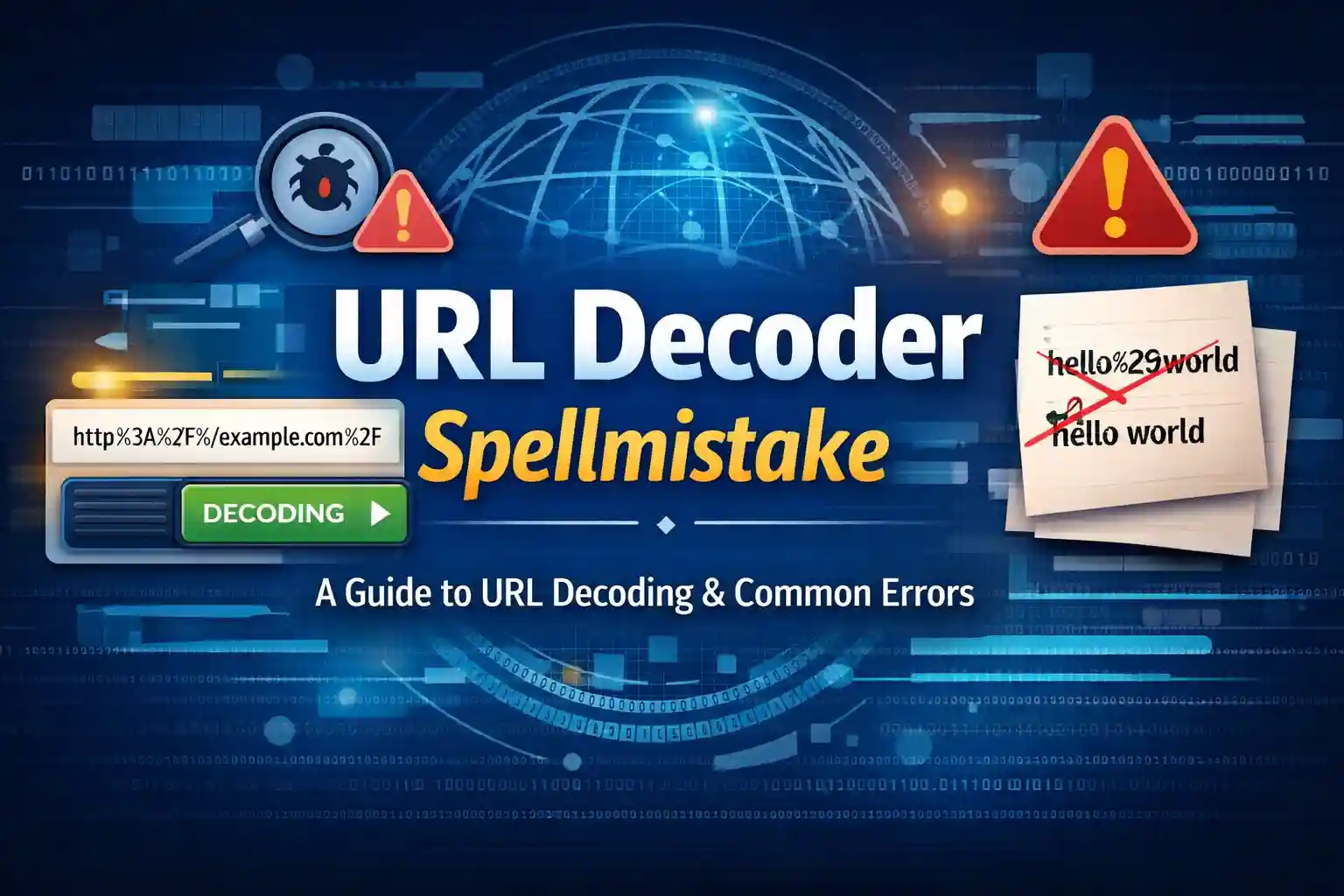
URL decoding can be prone to errors, commonly referred to as “spellmistakes.” These mistakes occur when decoded characters are misinterpreted due to improper decoding processes, such as double encoding or mismanagement of reserved characters. Understanding these common issues helps prevent confusion during decoding.
Tools and Techniques for URL Decoding
There are several online tools and libraries available for decoding URLs, making the process easier and more reliable. Tools like online URL decoders and built-in methods in programming languages such as JavaScript, Java, and PHP ensure that encoding and decoding operations are done seamlessly.
Practical Examples of URL Encoding and Decoding
Real-world scenarios highlight the necessity of URL encoding and decoding. For instance, a simple query string hello world in a URL is encoded as hello%20world. Using a decoder will convert it back to the original string. This process is integral to web navigation and API communication.
Language and Framework Support for URL Decoding
Most modern programming languages and frameworks have built-in support for URL encoding and decoding. These libraries provide predefined methods that help avoid mistakes and make decoding more reliable. Developers should use these libraries rather than relying on custom implementations to reduce the chance of errors.
Best Practices for Handling URL Decoding
To avoid URL decoding errors, developers should follow best practices such as understanding URL structure, using standard libraries for encoding and decoding, and ensuring no double encoding occurs. Consistent testing across environments will also ensure that decoded URLs function as expected in different systems.
Security Risks and Challenges in URL Decoding
While URL decoding is essential, it can also pose security risks if not handled properly. For instance, double encoding attacks can trick systems into bypassing security filters. To mitigate these risks, it’s crucial to validate URLs after decoding to ensure no malicious content is present.
Conclusion
URL decoding is a crucial step in web development and browsing, allowing for the proper interpretation of encoded URLs. By using standard decoding methods, understanding common mistakes, and following best practices, developers and web users can effectively manage URLs without encountering decoding errors. Always ensure proper validation and avoid pitfalls such as double encoding to maintain both security and functionality.
FAQs
What is URL decoding?
URL decoding is the process of converting a URL-encoded string back into its original, human-readable form. It reverses percent-encoding, where special characters are represented as a percentage sign followed by a two-digit hexadecimal value (e.g., %20 for a space).
Why do we need URL encoding and decoding?
URL encoding and decoding are necessary to ensure special characters in URLs, such as spaces or punctuation, do not interfere with the URL structure. Encoding makes these characters safe for transmission, while decoding restores them to their original form when needed.
What are common errors in URL decoding?
Common URL decoding errors include double encoding, where a URL is encoded multiple times, and misinterpreting encoded characters. For example, a plus sign (+) might be incorrectly interpreted as a space (%20), leading to mistakes.
Can URL decoding affect security?
Yes, improper URL decoding can pose security risks. Attackers may exploit issues like double encoding to bypass filters or inject malicious data. It’s essential to validate decoded URLs to prevent security vulnerabilities.
How can I decode a URL safely?
To decode a URL safely, use reliable online tools or programming language libraries designed for URL decoding (e.g., JavaScript’s decodeURIComponent or PHP’s urldecode). Always ensure that decoding is done correctly, especially in web applications and APIs.
Also read about: Where Can I Buy 1.5f8-p1uzt? Complete Guide to Availability, Meaning, and Safe Sources (2026)